
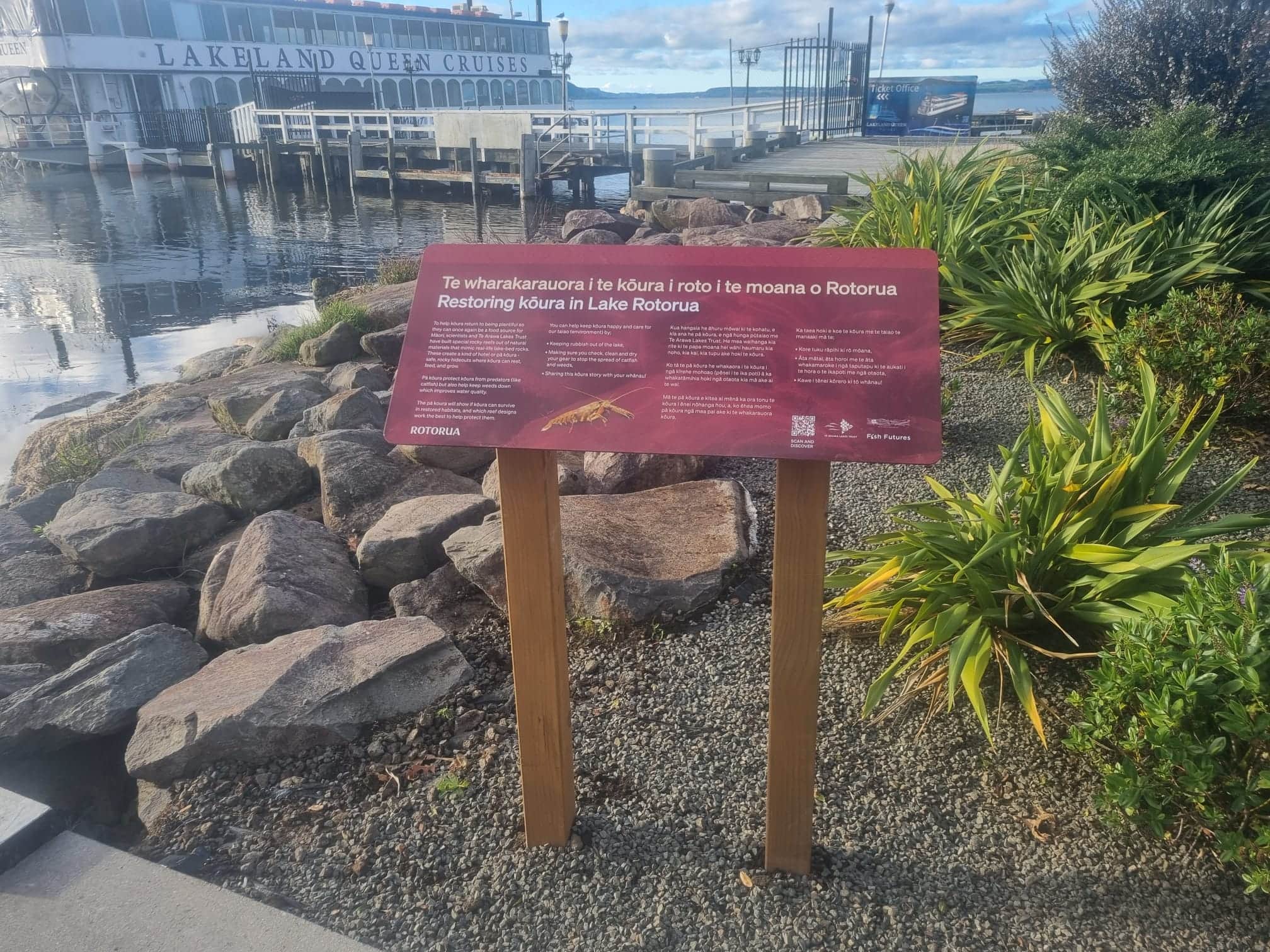
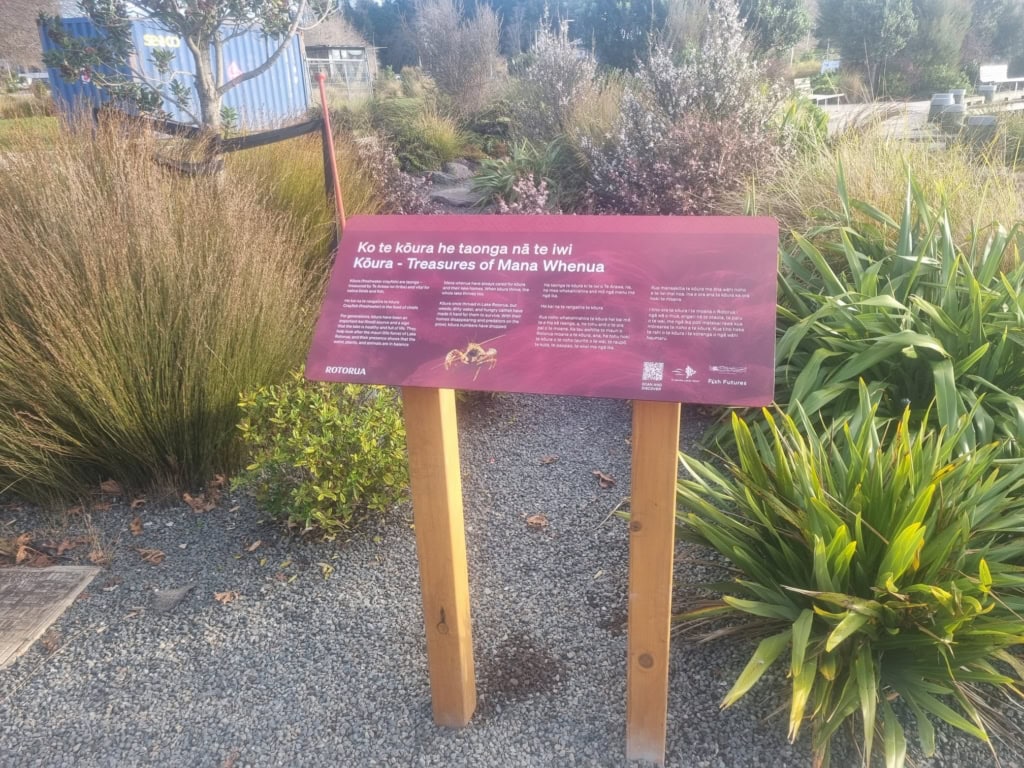
Visitors to Rotorua Lakefront can now learn more about the restoration of one of the region’s treasured taonga species through two new interpretive signs highlighting kōura and the work underway to help restore their populations.
Developed by Fish Futures researchers Dr Kati Doehring and Dr Ian Kusabs in partnership with Rotorua Lakes Council and Te Arawa Lakes Trust, the signs share the story of kōura (freshwater crayfish), their cultural significance to Te Arawa, and the innovative restoration efforts taking place across the Rotorua lakes.
Once abundant throughout Lake Rotorua, kōura populations have declined due to habitat loss, poor water quality, invasive weeds, and predation by introduced catfish. To help reverse this trend, researchers from Cawthron Institute and Te Arawa Lakes Trust have been working together through the Fish Futures programme to create pā kōura – specially designed rocky reefs made from natural materials that mimic kōura habitat.
These structures provide refuge where kōura can shelter, feed, and grow. Pā kōura have now been established in Lakes Rotorua, Rotoiti and Ōkaro, supporting wider efforts to restore healthy kōura populations across the rohe.
The new signage brings together science and mātauranga Māori, helping visitors understand both the ecological importance of kōura and their enduring cultural connection to Te Arawa. QR codes on the signs link to videos showcasing the restoration programme and underwater footage of kōura in their natural habitat.
The project demonstrates the power of collaboration between researchers, iwi and local government, while helping raise awareness of the importance of protecting freshwater ecosystems so kōura can thrive for generations to come.
Below you can find a kōura monitoring report which gives you an idea of how kōura is being sampled and at what numbers they occur in Lake Rotorua and Utuhina Stream.