
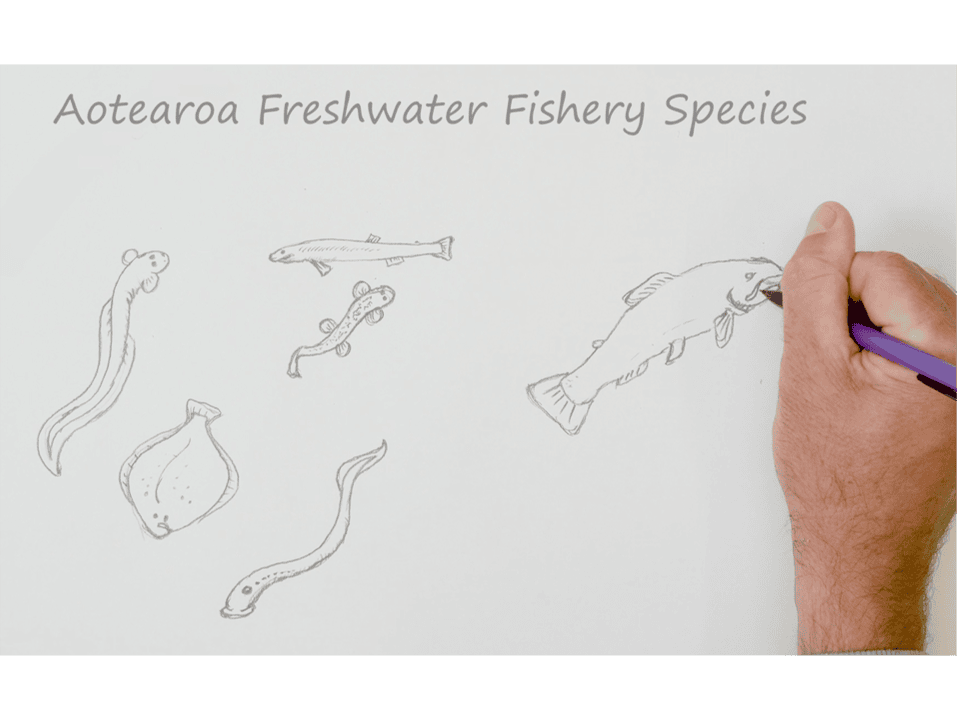
How do Aotearoa New Zealand’s native species interact with introduced fish species?
Dive into Robin Holmes’ captivating five-minute sketch-explainer video and uncover the surprising story of kōaro and smelt – two native fish species of Aotearoa New Zealand – and their uneasy relationship with introduced trout.
Restoring native fish in lakes is a complex challenge. Species like non-native trout and smelt have been introduced into the Te Awara Lakes and have reshaped food webs. We found that changes to one species can trigger unexpected effects. For example, removing trout might seem helpful if you want to restore native kōaro, which are eaten by trout, but trout also control smelt, which compete with native fish for food. Without trout, smelt could boom, making kōaro recovery harder.
Our research used multiple approaches—models, national data, natural experiments, and local knowledge—to understand these interactions. The evidence suggests that kōaro persist partly because trout suppress smelt and because streams and wetlands provide refuges. Reducing trout stoking could increase extinction risk rather than reduce it, unless it coincides with compensatory actions such as improving kōaro habitat quality and reducing nutrient loading.
Lake management must consider the whole ecosystem, not just one species. By combining science, mātauranga and community knowledge, we can make better decisions for the future of our fish populations.