
A North American fish invader, the brown bullhead catfish, was first detected in Lake Rotoiti in 2016. Despite large-scale efforts to remove catfish, mainly around the lake’s shoreline, their numbers continue to rise. This is a serious concern because catfish prey on kōura (freshwater crayfish) and other native species that are vital for healthy lake ecosystems and a key food source for Māori.
Over the course of a year, we analysed data on catfish movements, depths, and water temperatures obtained through acoustic telemetry – a method that tracks tagged animals using sound signals. We found that tagged catfish were regularly in offshore areas, especially during autumn and winter when their movements were less tied to the lake bottom.
Understanding these seasonal patterns is key for management. Our study shows that removal efforts should sometimes target offshore areas, not just the shoreline, and be timed strategically throughout the year to better protect native biodiversity and restore ecosystem health.
A new paper delving deeper into this topic will be published soon—watch this space!
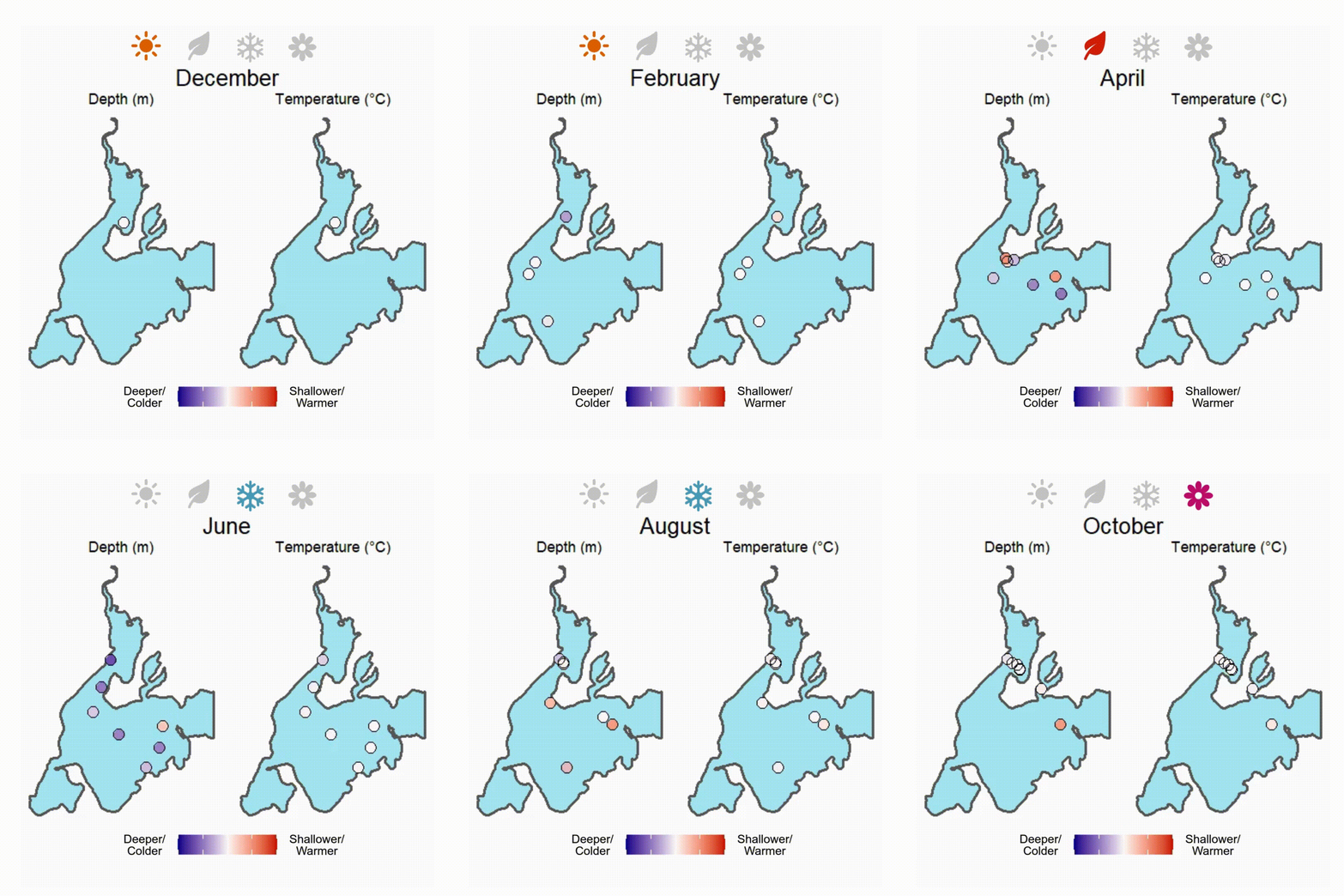
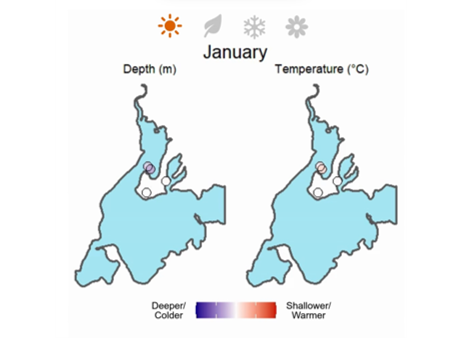
Seasonal movements of tagged brown bullhead catfish in Lake Rotoiti, Aotearoa New Zealand. Each circle represents a catfish tracked using acoustic telemetry over one year. Circle colours show how each fish’s depth and temperature differ from the daily average: red = warmer and shallower, purple = colder and deeper. White circles mean all fish are at similar depths and temperatures. This data reflects Southern Hemisphere seasons—December to February is summer, while June to August is winter. These patterns reveal when catfish shift offshore or stay near the lake bottom—critical insights for planning effective removal strategies.